The event manager's guide to word-of mouth marketing
Turn the people already connected to your event into a promotion channel you can measure. This guide covers the difference between traditional marketing methods and word-of-mouth marketing, the 5 silent promoters, ready-made templates, and metrics.


Why won't anyone promote your event?
Your event is three weeks out and you still don't have enough visibility or registrations. You keep spending budget on ads that aren't converted, but in the meantime you have an audience that already has a reason to talk about your event. The problem is they don't know what to post and don't have the time to do it.
This guide shows you how to close that gap:
This word-of-mouth event marketing e-book is perfect for…

Event marketing managers
You run the event and you write the recap. This gives you a reporting model that holds up when someone asks what the budget actually bought.
Heads of marketing & CMOs
You need event spend to sit in the same spreadsheet as every other channel. The framework maps event engagement to conversions & revenue.
Sponsorship and partnerships teams
Sponsors are done paying for logo placement. Show them reach, clicks, and conversions attributed to their slot in the campaign.

Agencies and event producers
You're proving your own value as well as the client's. Walk into the debrief with attribution data instead of a screenshot of the hashtag feed.
Take a peek at what’s Inside
Here are three event activities from the guide to inspire your event strategy:
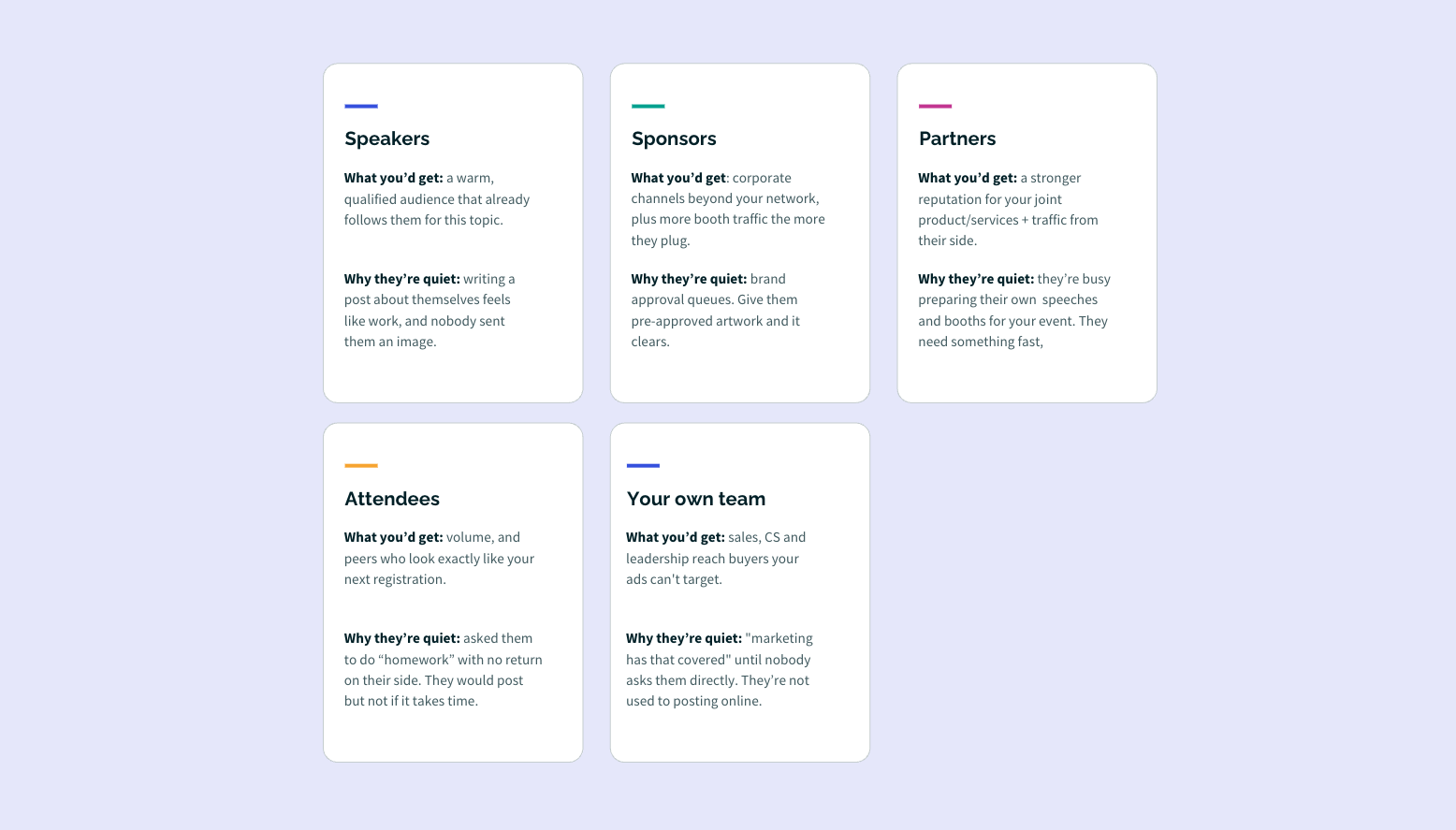
1. The five people who should be promoting your event
Speakers, sponsors, partners, attendees, and your own team all have a reason to talk about your event, but all stay quiet for the same four reasons: no assets, no time, no reminder, no reason. The guide breaks down what each group is worth and provides ready-made content templates you can send them.
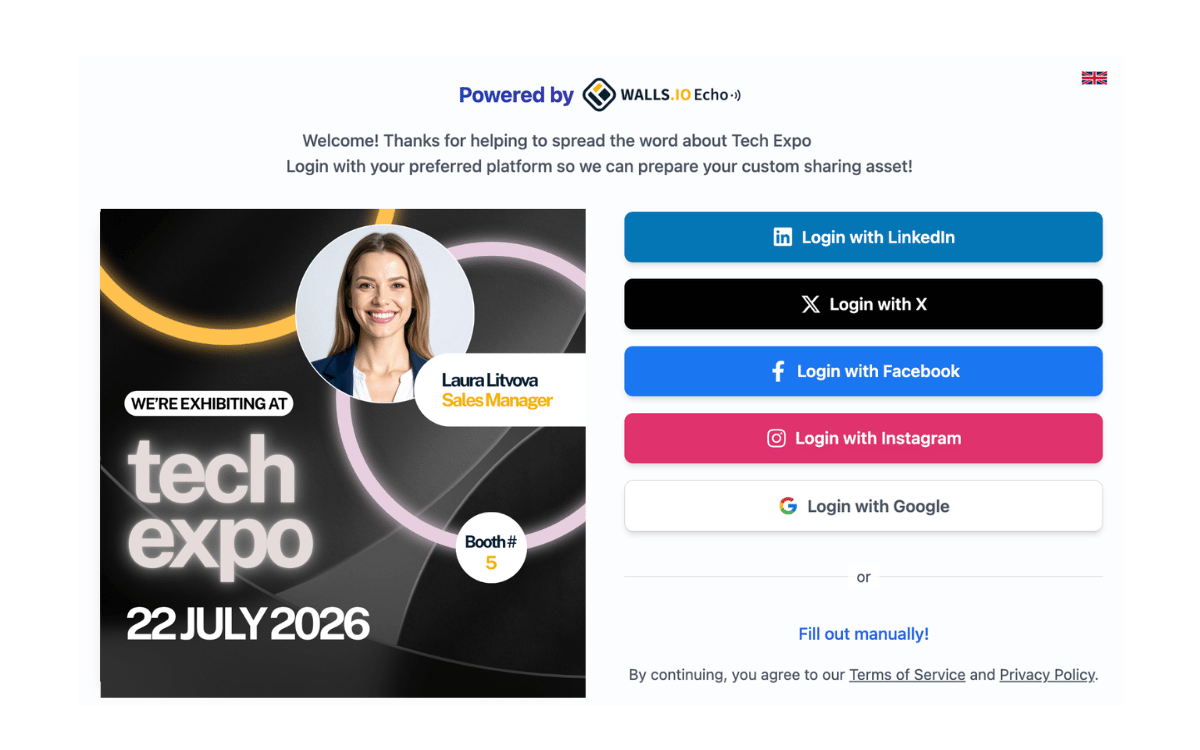
2. Build the engine before doors open
Five steps, roughly one afternoon of setup. This word-of-mouth marketing guide includes a timing plan from speakers at 12 weeks out to the final 10-day reminder wave.
3. What good looks like: Event Fest
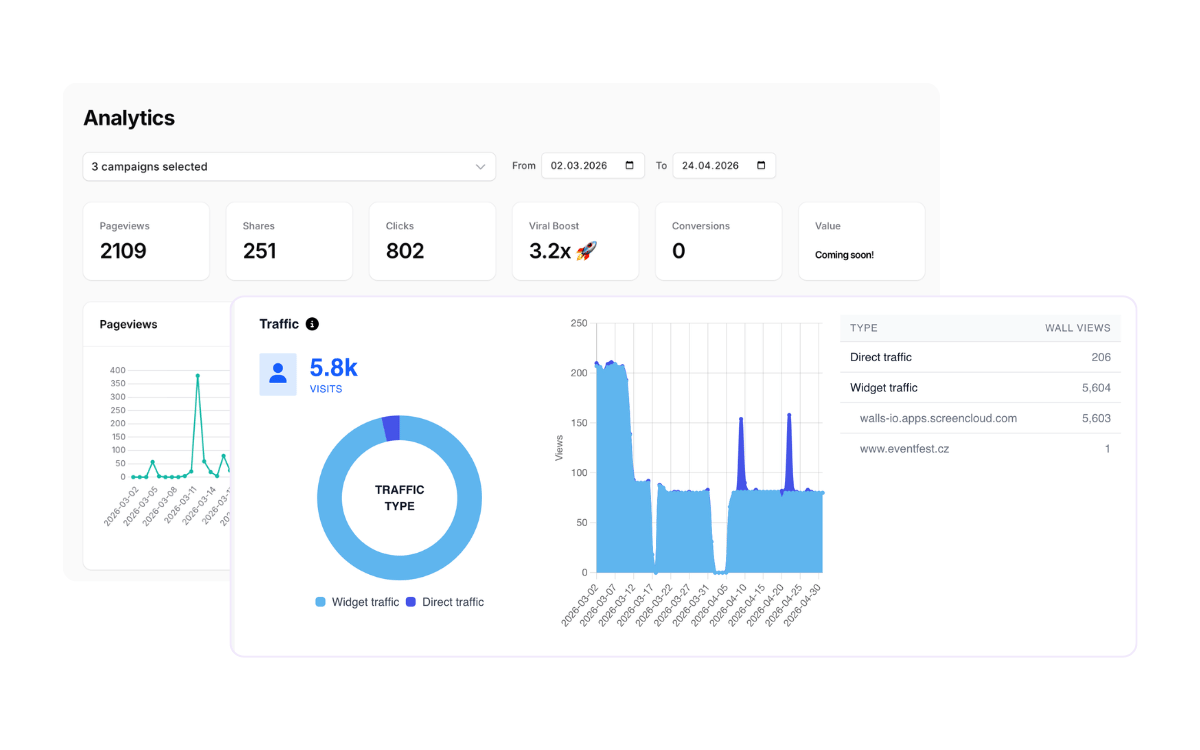
The largest event-marketing festival in Czechia and Slovakia added Walls.io Echo's shareable branded cards to their traditional marketing stack. They drove 2,109 page views, 251 shares, 802 clicks, and a 3.2x viral boost before doors even opened.
Build word-of-mouth you can measure
Real Results: Echo Case Studies

.webp)
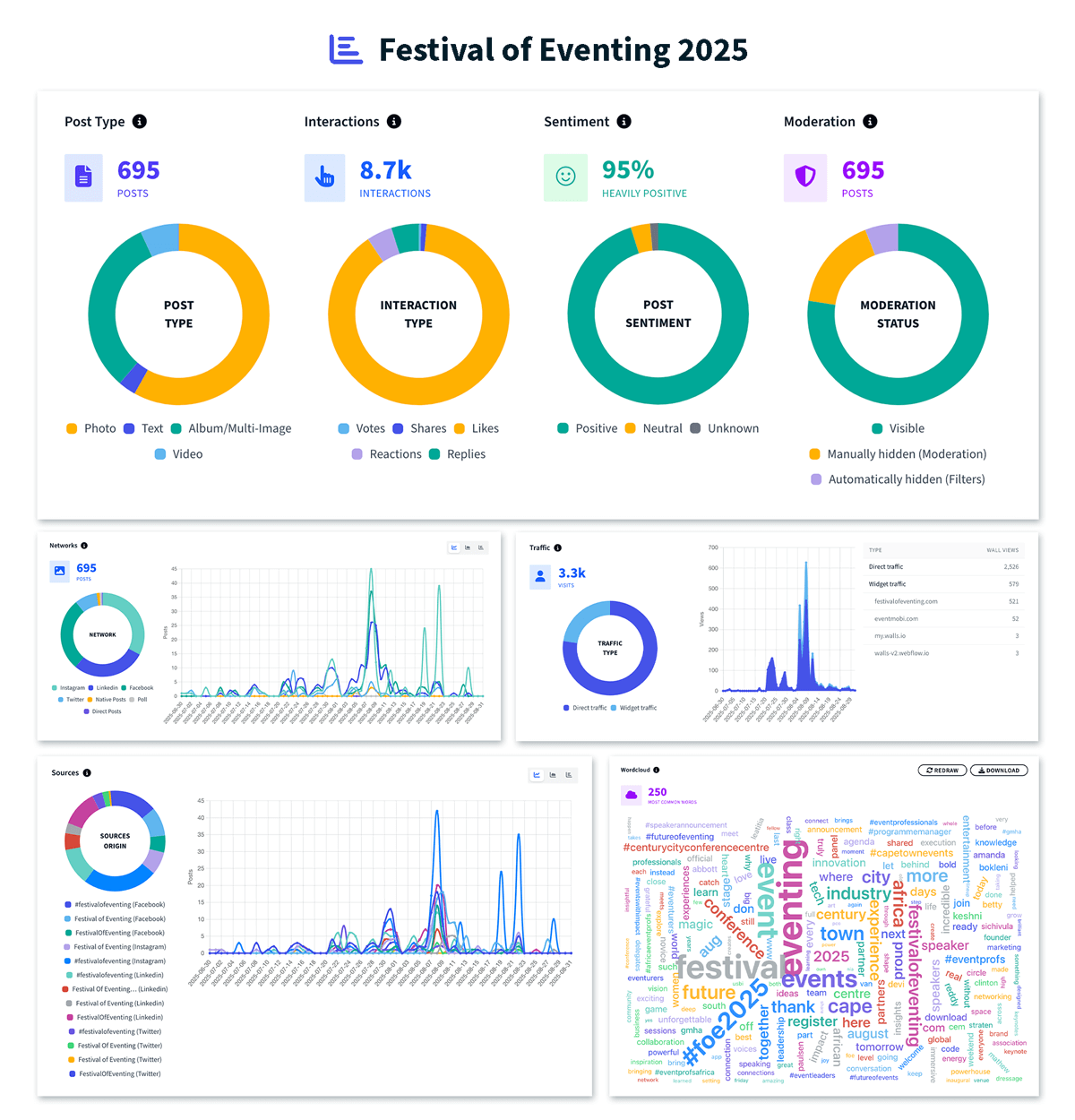
Event Options Drives Engagement With Walls.io Echo: 10.7x Virality Boost, 3.3k Page Views & 522 Posts Before the Event Started
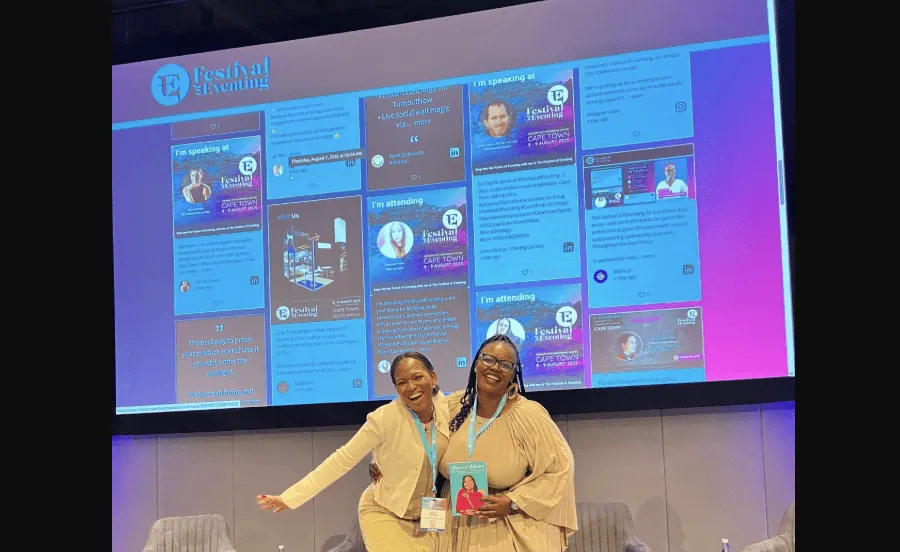
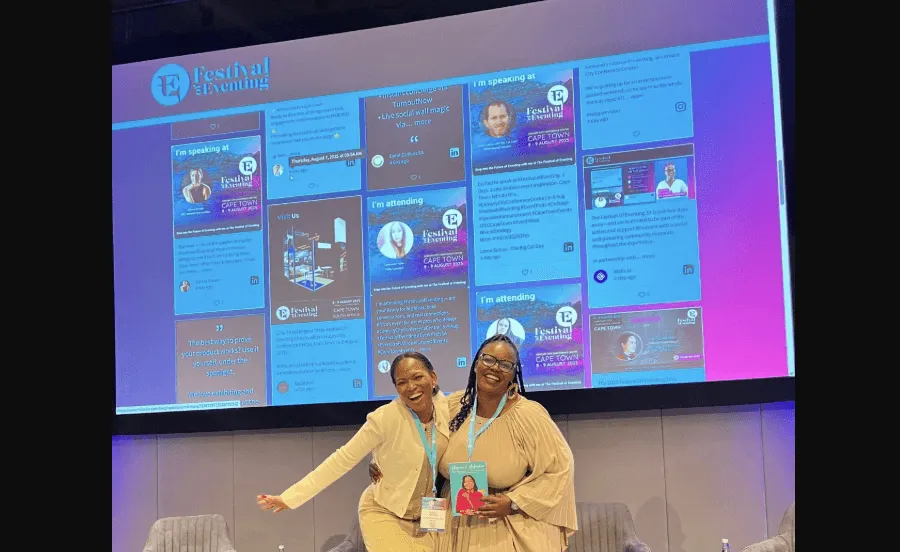
Link to "Current" pageFor the Festival of Eventing conference, creating a sense of connection and excitement wasn’t left to chance. Event Options, the event’s tech partner, knew that the attendee engagement had to start well before people walked through the venue doors and continue during and after the event. To make that happen, they turned to Walls.io Social Walls and Walls.io Echo.



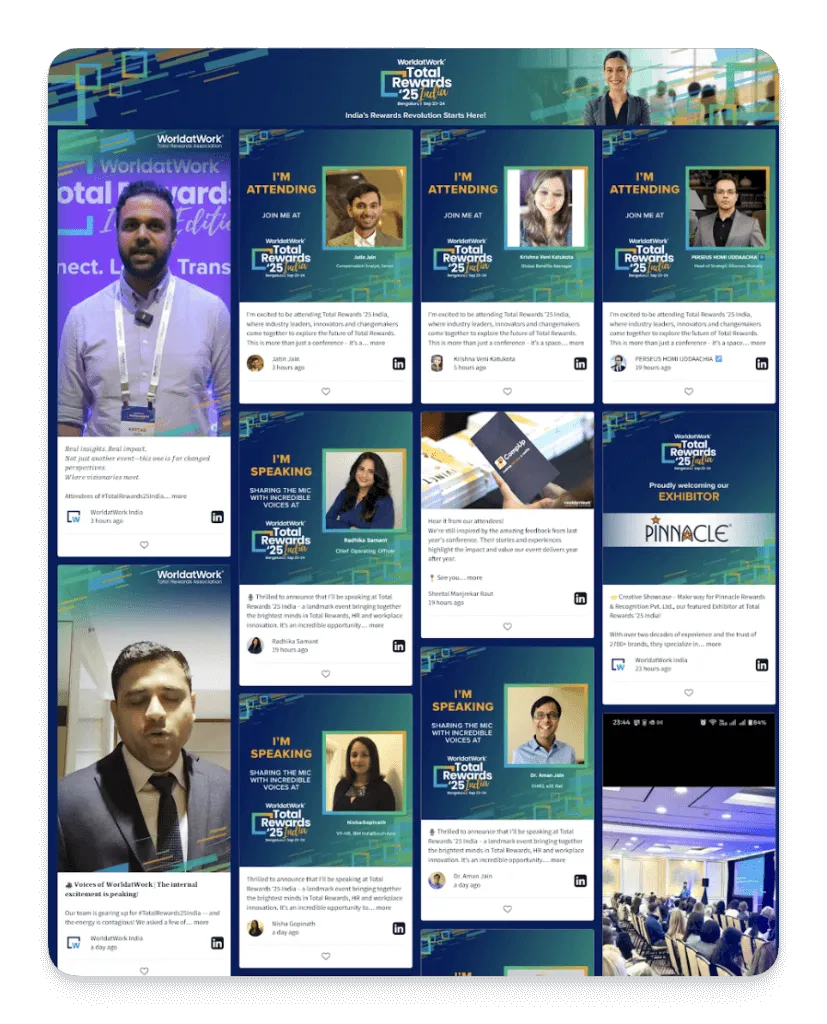
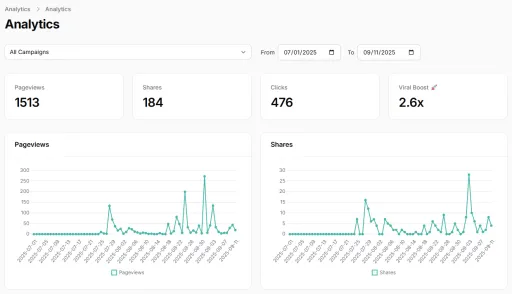
WorldatWork Fosters Connections with Walls.io and Echo
Link to "Current" pageFrom events to memberships to company anniversaries, WorldatWork keeps its global community engaged and promotes it's upcoming events through social media walls and Walls.io Echo.

Frequently asked questions
What is word-of-mouth marketing for events?
It's the practice of equipping the people already connected to your event — speakers, sponsors, exhibitors, attendees, and staff — with ready-made branded content and tracked links, so they promote it on their own channels. Unlike organic buzz, every share, click, and registration is attributed.
How far out should we launch?
Start when registration opens and run continuously. Most of the volume lands in the final four weeks, but the sooner you start building momentum, the better.
What's a good campaign share rate?
15% of share-page visitors posting is a strong campaign. Anything above 10% is already outperforming paid ads.
Do I need a big budget or a data team to track event ROI?
No, the framework in this playbook works with the tools most event teams already have, like a share campaign, UTM parameters and Google Analytics. Echo handles the tracking layer, so you don't need to build a custom dashboard. Event Fest ran its entire campaign by including share links in emails and confirmations. This was a change in process rather than a change in budget.
How do we prove it actually worked?
UTMs on every shared link plus one tracking snippet on your registration thank-you page. Without them, word-of-mouth shows up as "direct traffic" and gets cut in the next budget round.
Does this work for virtual and hybrid events?
Yes. The share cards and tracking work the same whether your event is in-person, virtual, or hybrid.
How does this connect to a social wall?
Echo covers what happens before and after the event, while a social media wall covers what happens during it. Most teams run both: Echo campaigns build anticipation and collect shares in the weeks beforehand, then the wall displays the resulting content live on screen. Both feed the same analytics, so pre-event reach and on-site engagement land in one report rather than two.
See what Echo does for your next event
Run a pre-event sharing campaign, track every share to a conversion, and walk into the debrief with a number.